Distributed Perception
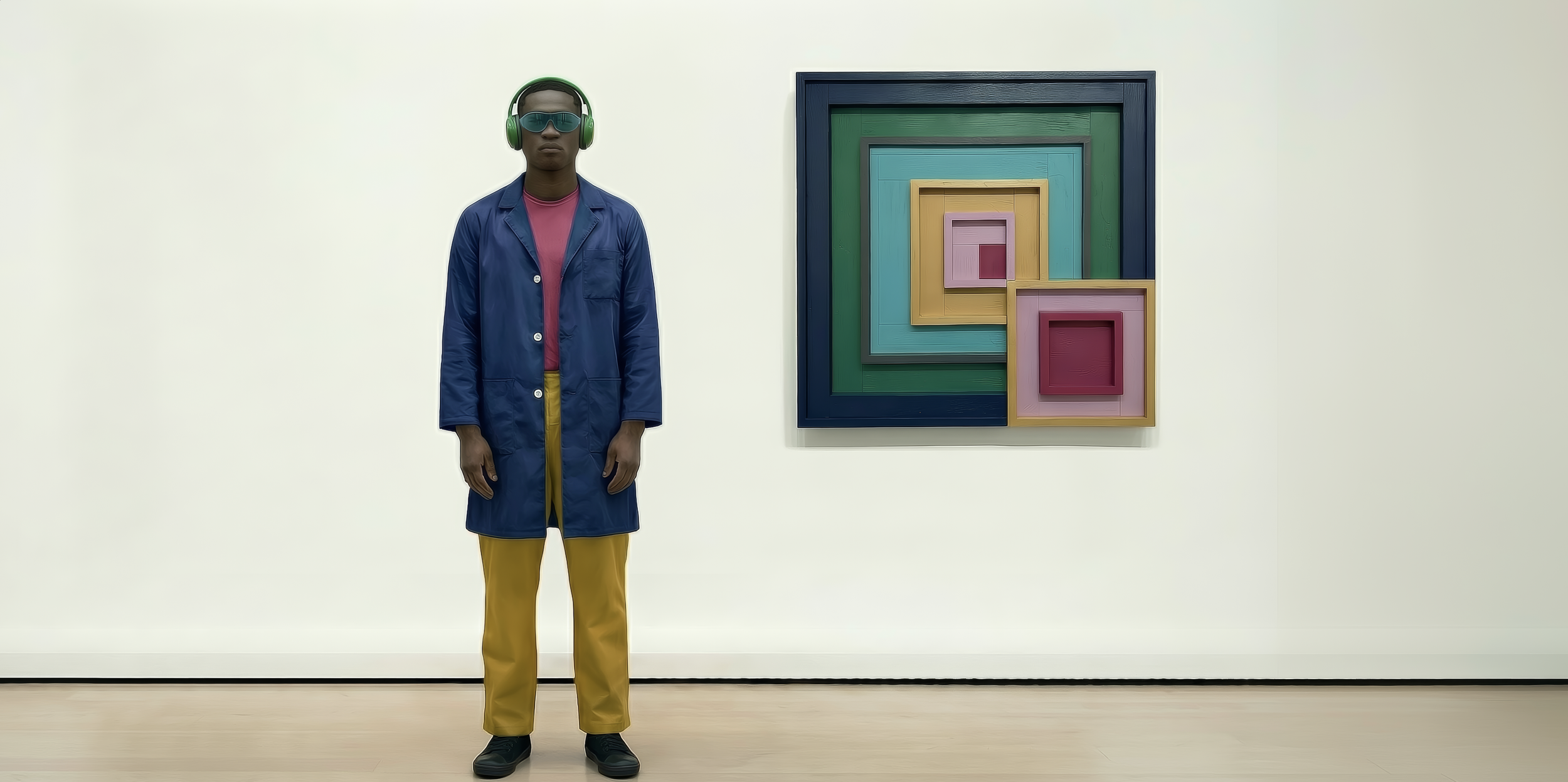
Taken together, the elements of Color Code constitute a form of distributed knowledge production—but one that operates by a different logic than the distributed systems that currently dominate artificial intelligence. Every constructed painting carries its origins through its title. Color Code: MoMA, New York City, December 2026, [Participant Name]. The colors in the painting are not arbitrary—they are the colors a particular person reported seeing through a particular lens in a particular room on a particular day.
This transparency is not incidental. It is the project’s answer to the central ethical question that shadows all AI-engaged art: who provides the data, and what do they get in return? In the dominant model of machine learning, the answer is: everyone provides the data, and no one in particular is compensated, credited, or even aware that their contribution exists. Color Code inverts this. The participants are not scraped. They are invited. They are not anonymous contributors to a training set. They are named collaborators in a system that cannot function without them. Each participant is credited, compensated, and provided with the full documentation of their expedition—diary entries, chromatic index, and a record of the constructed painting their observations generated. The chain of custody runs in both directions.
The question of authorship in Color Code is deliberately unresolved, because the question of authorship is one of the project's subjects. Sol LeWitt proposed that the idea is the machine that makes the art. Color Code complicates that claim. There is no single idea and no single machine. There is a system with human and nonhuman components at every stage, and the art is what the system produces—not at any one node, but across the full chain of translations. This chain extends from Josef Albers' original paintings through human participants, AI interpretation, image generation, and the artist's hand—and at no point does authorship rest with a single agent. This is Artificial Conceptualism in practice.
As the project extends across cities and continents, the constructed paintings accumulate into something larger than a series. They become an atlas of situated perception—a record of how color is seen differently by different people in different places, mediated by the same systematic process. The atlas is not comprehensive and does not pretend to be. It is partial, contingent, shaped by which institutions are visited when, which communities are represented, which participants happen to be available on a given afternoon. But this partiality is itself a form of honesty. It reflects the reality that all knowledge production—including the training of artificial intelligence—is shaped by access, by selection, by the accidents of who shows up and what they happen to see. The difference is that Color Code makes these contingencies visible rather than hiding them behind the appearance of universality.
What Color Code does not do is argue a position. It does not claim that artificial intelligence cannot make art, nor that it can. It does not celebrate technology or mourn its encroachment. It stages a condition—the condition of not knowing whether the thing in front of you is thinking or performing thought, whether the object on the wall is the product of a hand or a system or both—and leaves the viewer inside that condition.